Automation is no longer a supporting function in SaaS products – it is becoming part of the product itself. Whether you are orchestrating internal workflows, integrating APIs, or building AI-driven systems, choosing the right automation layer matters.
Two tools often compared in this space are:
While both address workflow automation, they operate at different abstraction levels and serve different architectural needs.
What is n8n?
n8n is an open-source, low-code workflow automation platform. It allows teams to design workflows visually by connecting nodes representing apps, APIs, triggers, and logic.
Core Characteristics:
- Visual drag-and-drop editor
- 400+ prebuilt integrations
- Self-hosted or cloud deployment
- JavaScript customization support
- Rapid AI workflow orchestration
n8n is commonly used for:
- Internal process automation
- SaaS integrations
- CRM sync
- AI pipelines (RAG, LLM chaining)
- MVP acceleration
It prioritizes speed and accessibility.
What is OpenClaw?
OpenClaw takes a different approach. It is a developer-first automation framework focused on programmable orchestration rather than visual configuration.
Core Characteristics:
- Code-defined workflows
- Backend-level integration
- Deterministic execution control
- Strong versioning and testing compatibility
- Suitable for embedded automation
OpenClaw prioritizes control and extensibility.
Side-by-Side Comparison
| Category | n8n | OpenClaw |
| Primary Focus | Low-code workflow automation | Developer-driven orchestration |
| Setup Speed | Fast | Moderate to slower |
| Learning Curve | Low to moderate | Moderate to high |
| UI | Visual editor | Code-based |
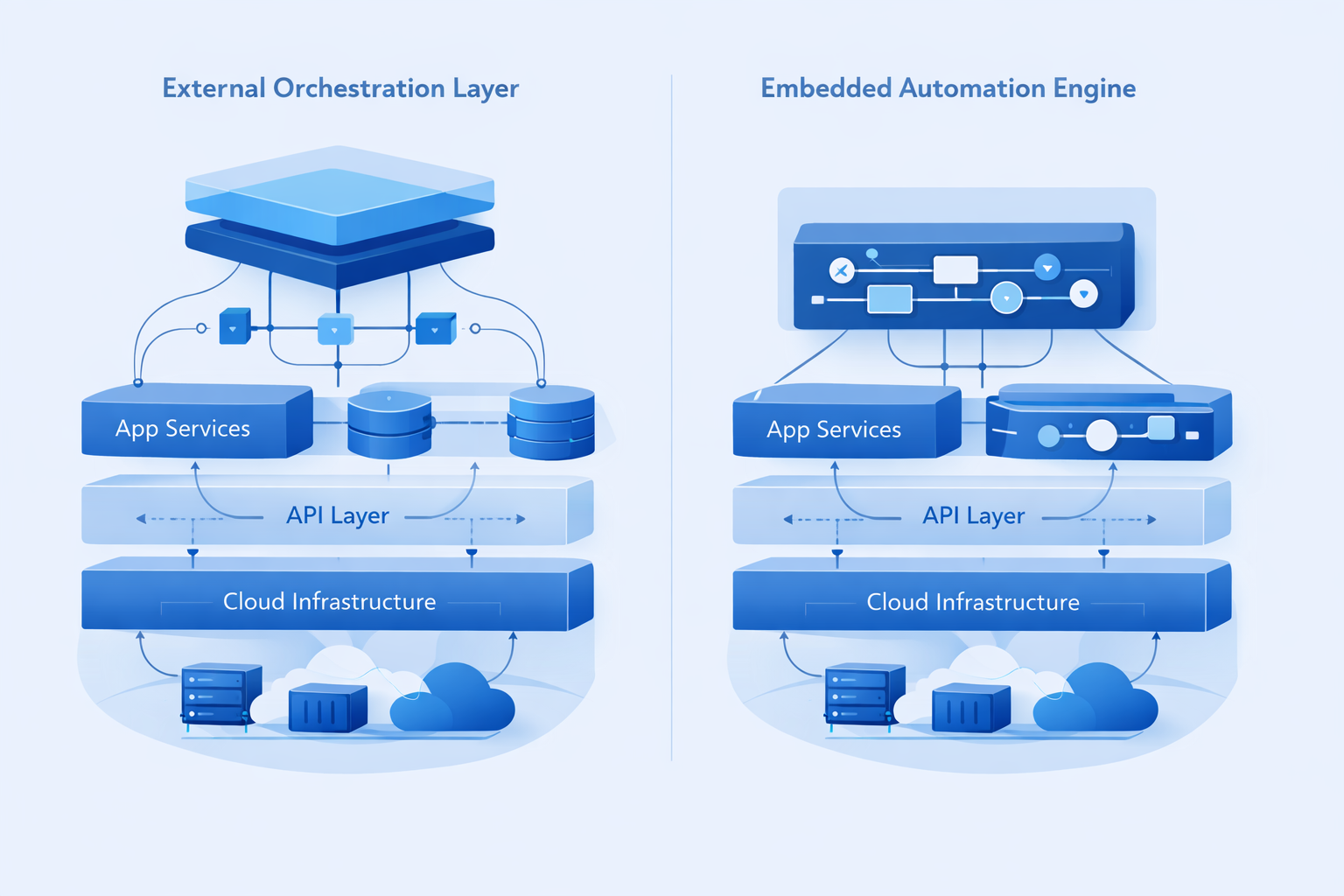
| Integration Style | External automation layer | Embedded in the backend |
| AI Workflow Support | Easy to implement | Requires engineering setup |
| Best For | Internal ops & rapid SaaS integrations | Core product automation |
| Scalability Control | Good with hosting discipline | High architectural control |
| Governance | Basic unless extended | Stronger if engineered properly |
Strategic Lens: Where Automation Lives
The real decision is not about tools. It is about where automation belongs in your architecture.
Choose n8n When:
- Automation supports operations, not core logic
- You need fast experimentation
- You want low-code flexibility
- You are in an early-stage SaaS
- AI workflows need quick orchestration
n8n acts as an automation layer around your product.
Choose OpenClaw When:
- Automation is part of your product’s value proposition
- You need deep backend integration
- Deterministic execution matters
- Your engineering team owns workflow logic
- You want stronger long-term control
OpenClaw becomes part of your product infrastructure.
SaaS Growth Stage Considerations
Early-Stage SaaS
Speed matters more than perfection.
- n8n reduces engineering overhead
- Helps validate integrations quickly
- Avoids premature complexity
OpenClaw may be excessive unless orchestration is core to the product.
Growth-Stage SaaS
Complexity increases.
- n8n works well for non-critical workflows
- OpenClaw becomes attractive for core orchestration
This is often where hybrid strategies emerge.
Scale-Stage SaaS
Reliability and architecture discipline dominate.
- Overreliance on low-code tools can create bottlenecks
- Developer-driven orchestration may offer better control
At scale, automation must align with system architecture – not override it.
AI & Agentic Workflow Perspective
With AI systems becoming more agentic:
- n8n works well for early AI pipelines and tool chaining
- OpenClaw supports more controlled, stateful AI orchestration
If you are building:
- LLM-based customer workflows → n8n is efficient
- AI-native SaaS automation engines → OpenClaw offers stronger foundations
Cost & Maintenance Trade-Offs
n8n
- Lower initial engineering cost
- Faster deployment
- Hosting responsibility remains
- Easier onboarding
OpenClaw
- Higher initial build effort
- Stronger architectural ownership
- Requires mature DevOps practices
The difference lies in short-term velocity vs long-term control.
Common Mistakes SaaS Teams Make
- Choosing low-code tools for core product logic
- Introducing developer frameworks too early
- Ignoring observability and monitoring
- Scaling automation without architectural clarity
- Treating automation as a feature rather than infrastructure
How Rezolut Approaches Automation Decisions
At Rezolut Infotech, automation choices are evaluated based on:
- Product maturity
- Architecture readiness
- AI roadmap
- Team capability
- Long-term scalability goals
The goal is not to choose the most powerful tool, but the right abstraction level for the current growth stage.
Final Verdict
There is no universal winner.
- n8n excels in rapid automation, low-code orchestration, and AI experimentation.
- OpenClaw excels in embedded, developer-driven orchestration with deeper control.
For many SaaS companies, the journey often starts with n8n and gradually transitions toward more programmable frameworks as complexity grows.
The key is alignment. Automation should accelerate growth – not introduce hidden architectural risk.