Large Language Models (LLMs) are no longer experimental tools. In 2026, they are foundational infrastructure for SaaS products, enterprise automation, AI copilots, analytics systems, and customer-facing applications.
But with dozens of capable models available, the real challenge is no longer “What is an LLM?” – it is:
Which model should we use – and why?
What Defines a “Best” LLM in 2026?
The best model is not the one with the largest parameter count.
In 2026, selection is based on:
- Accuracy and reasoning ability
- Latency and performance
- Cost per token
- Context window size
- Tool-use capabilities
- Enterprise security readiness
- Deployment flexibility (cloud vs on-prem)
Different use cases demand different trade-offs.
1. GPT-4 (by OpenAI)
Strengths:
- Advanced reasoning
- Strong coding performance
- Tool usage and structured outputs
- Mature ecosystem
Best for:
- Enterprise copilots
- Code generation
- Multi-step reasoning tasks
- High-quality content systems
GPT-4 remains a top-tier general-purpose model in 2026, especially for companies prioritizing performance over minimal cost.
2. Claude (by Anthropic)
Strengths:
- Large context window
- Strong summarization
- Controlled outputs
- Enterprise safety focus
Best for:
- Legal analysis
- Document-heavy workflows
- Knowledge processing
- Enterprise AI assistants
Claude is particularly strong in regulated industries where output control and explainability matter.
3. Gemini (by Google)
Strengths:
- Deep integration with the Google Cloud ecosystem
- Multimodal capabilities
- Strong search integration
Best for:
- Enterprise Google Cloud users
- Multimodal AI systems
- Data-connected applications
Gemini excels when integrated into broader Google infrastructure environments.
4. Llama 3 (by Meta)
Strengths:
- Open-source flexibility
- On-prem deployment capability
- Cost-efficient scaling
Best for:
- Self-hosted AI systems
- Regulated industries
- Cost-sensitive SaaS platforms
- Model fine-tuning
Llama 3 represents the maturing of open-source AI into production-grade capability.
5. Mistral Models
Strengths:
- High performance-to-cost ratio
- Strong European AI ecosystem presence
- Competitive reasoning ability
Best for:
- Cost-efficient production systems
- Regional compliance requirements
- Performance-sensitive AI features
Mistral models have become strong alternatives for companies seeking reduced vendor dependency.
6. Command R (by Cohere)
Strengths:
- Retrieval-optimized
- Enterprise-ready
- Designed for RAG systems
Best for:
- Enterprise search
- Retrieval-augmented generation (RAG)
- Knowledge-heavy SaaS products
Cohere has positioned itself strongly in enterprise AI use cases.
7. Phi-3 (by Microsoft)
Strengths:
- Smaller footprint
- Efficient inference
- Suitable for edge and on-device scenarios
Best for:
- Edge AI
- Embedded systems
- Lightweight enterprise deployments
Small Language Models (SLMs) like Phi-3 represent a major 2026 trend: efficiency over size.
8. Grok (by xAI)
Strengths:
- Real-time information integration
- Social and contextual awareness
- High conversational responsiveness
Best for:
- Real-time applications
- Social data analysis
- Consumer-facing AI tools
The Rise of Model Diversity in 2026
In 2023-2024, many companies relied heavily on a single LLM provider.
In 2026, that approach is considered risky.
Leading organizations now use:
- Model routing layers
- Multi-model fallback strategies
- Cost-based switching
- Task-based specialization
For example:
- GPT-4 for complex reasoning
- Llama 3 for internal workloads
- Smaller models for summarization
- Specialized models for RAG
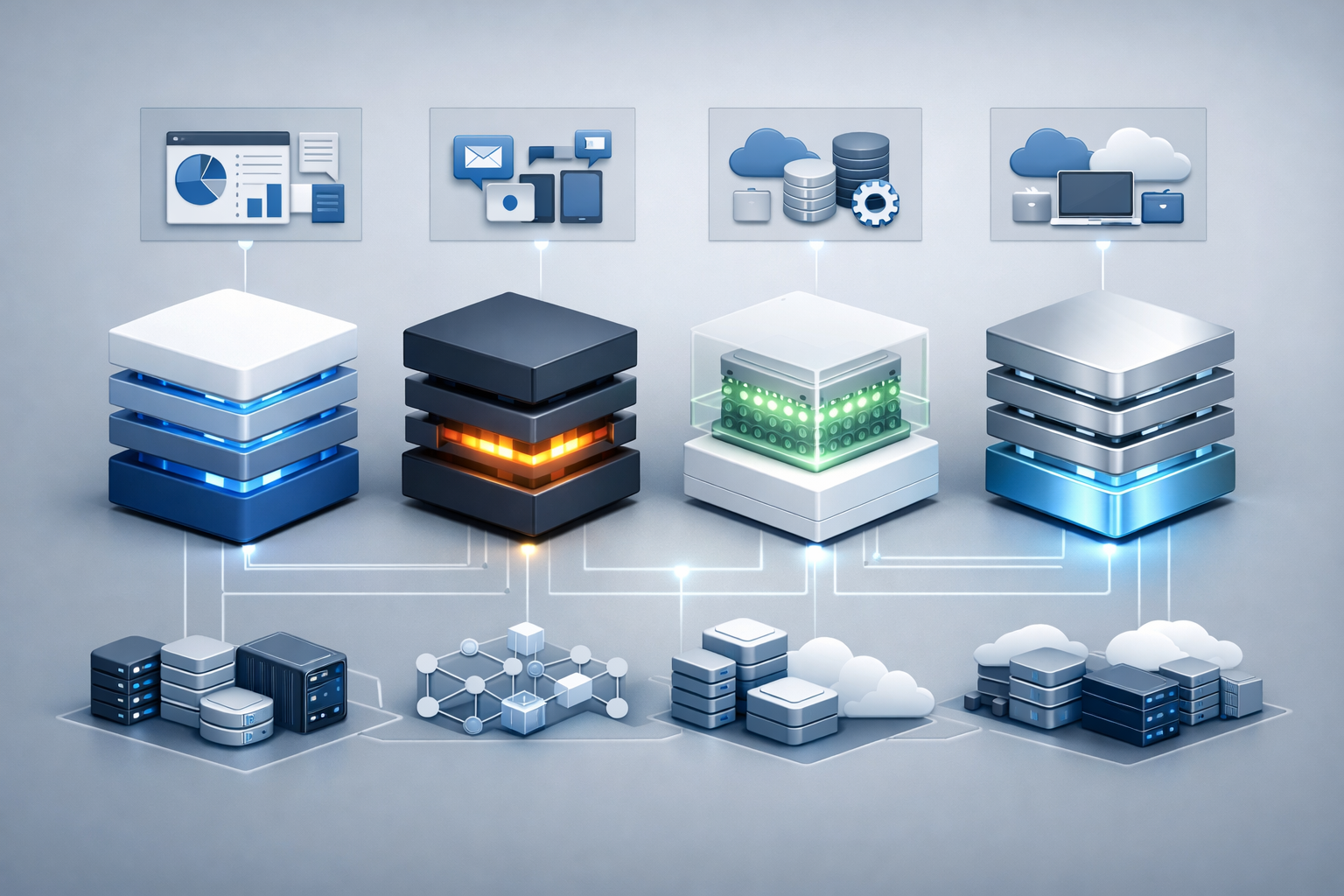
This is known as a multi-model AI strategy.
How SaaS Companies Should Choose an LLM
Instead of asking “Which model is best?” ask:
- What problem are we solving?
- What latency is acceptable?
- What is our cost tolerance?
- Do we need an on-prem deployment?
- Is compliance a factor?
- Will we switch models later?
Your architecture should be model-agnostic, allowing future switching without rewrites.
Open-Source vs Proprietary Models in 2026
Proprietary Models (GPT-4, Claude, Gemini)
Pros:
- Higher raw performance
- Managed infrastructure
- Faster innovation cycles
Cons:
- Vendor dependency
- API-based cost scaling
- Limited customization
Open-Source Models (Llama 3, Mistral)
Pros:
- Deployment flexibility
- Cost control
- Custom fine-tuning
- Data sovereignty
Cons:
- Requires engineering maturity
- Infrastructure responsibility
The right choice depends on organizational readiness.
Cost Is Now a Strategic Variable
LLM cost structures include:
- Token usage
- Embedding costs
- Context size
- Compute requirements
- Inference scaling
In 2026, FinOps and AI cost governance are tightly integrated.
The “best” model may not be the smartest one – it may be the one with the best performance-per-dollar ratio.
What’s Changing in 2026?
- Bigger models are not always better
- Smaller, more efficient models are rising
- Multi-model strategies are standard
- AI governance is mandatory
- Architecture matters more than model choice
Model selection is now part of platform strategy, not experimentation.
Final Thoughts
There is no single best large language model in 2026.
The GPT-4, Claude, Gemini, Llama 3, Mistral, Command R, Phi-3, and others – each dominate in different dimensions.
The real competitive advantage comes from:
- Choosing models intentionally
- Designing model-agnostic systems
- Monitoring performance and cost
- Aligning AI capability with business outcomes
In the end, LLM success is not about the model alone. It’s about how intelligently you embed it into your product and architecture.