
How Rezolut Helps Startups and Businesses with Technology

Building digital products today is not just about writing code. Startups and growing businesses face a far more complex challenge: validating ideas quickly, scaling systems without breaking them, and adopting AI in ways that actually deliver business value. This is where Rezolut Infotech positions itself differently. Rezolut works as a technology partner for startups and […]
The Future of SaaS Platforms: Predictive, Automated, AI-Native

Software-as-a-Service (SaaS) has gone through multiple waves of evolution. What started as simple cloud-hosted alternatives to on-premise software has matured into sophisticated platforms that power critical business operations across industries. Today, SaaS is entering its next major phase. The future of SaaS platforms is not just cloud-based or subscription-driven. It is predictive, automated, and AI-native […]
How Roadmaps Should Evolve from MVP to Scale
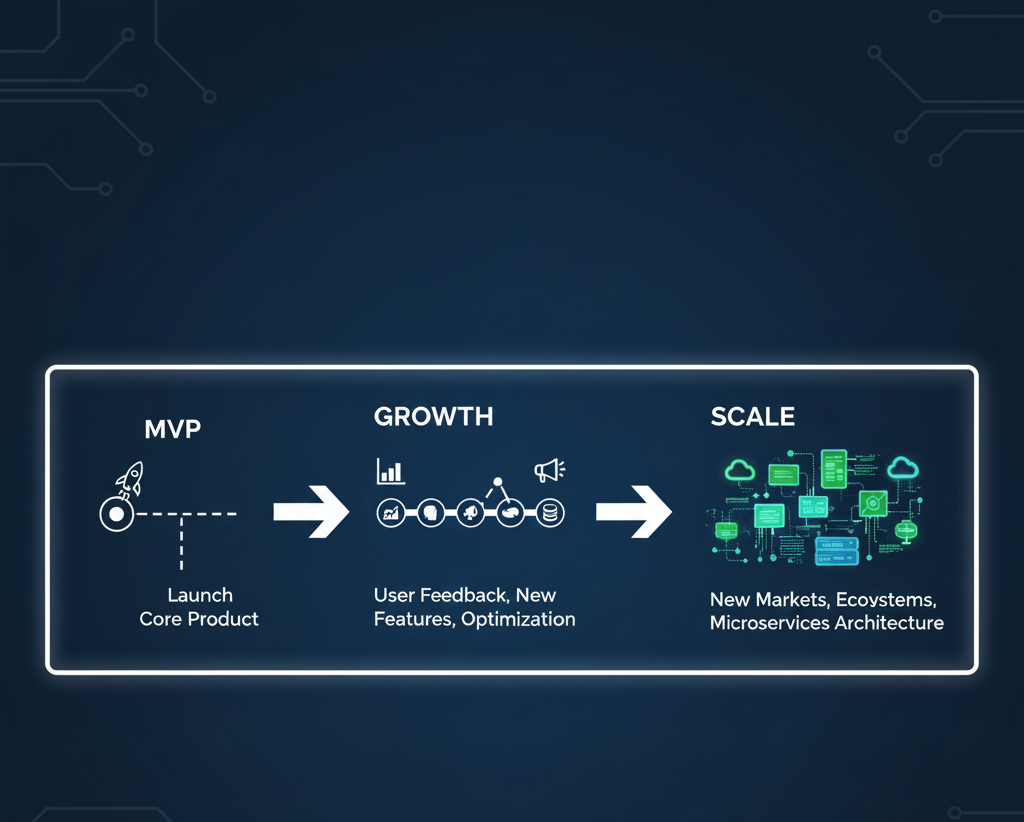
A product roadmap that works during the MVP stage often breaks down once a startup begins to scale. This is not because the roadmap was wrong – but because roadmaps must evolve as the product, users, and organization evolve. Many startups struggle during this transition. They either: Both approaches create friction, misalignment, and wasted effort. […]
When to Break a Monolith into Microservices

Microservices are often positioned as the “end game” architecture for scalable products. In reality, most startups and growth-stage companies are better served by a well-structured monolith (or modular monolith) for longer than they think. Moving to microservices too early increases complexity, slows delivery, and raises operational costs. Moving too late can create bottlenecks that stall […]
Why Many MVPs Fail And How to Avoid Common Mistakes

The concept of a Minimum Viable Product (MVP) is simple: build the smallest version of a product that delivers value, launch quickly, learn from real users, and iterate. Yet despite this clarity, a large percentage of MVPs still fail not because the idea was bad, but because the MVP was built the wrong way. Founders […]
Monolithic vs Modular Monolith vs Microservices
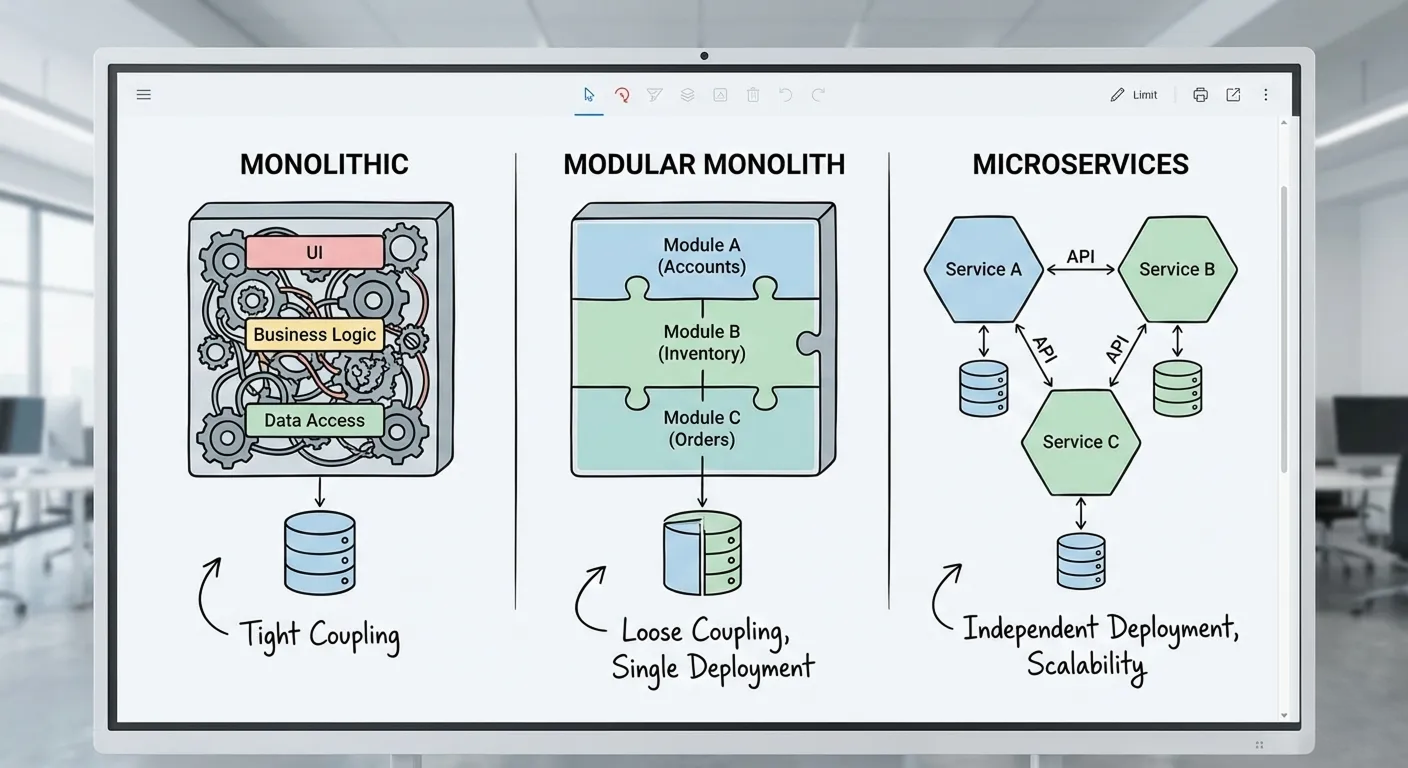
One of the most important technical decisions a startup or scaling company makes is how to structure its application architecture. This decision affects development speed, scalability, cost, team productivity, and long-term maintainability. Yet many founders face confusion when choosing between: The problem isn’t that one approach is “right,” and the others are “wrong.” The real […]
The Importance of System Design for Early-Stage Startups

When startups fail due to technical reasons, it’s rarely because the code was bad. More often, it’s because the system design was weak or ignored altogether. Early-stage founders tend to focus on features, speed, and shipping quickly – often treating system design as something to worry about “later.” Unfortunately, poor system design decisions made early […]
How Founders Can Prioritize Features for an MVP

One of the most common reasons startups fail is not a lack of ideas or effort, but rather building the wrong features at the wrong time. Founders often feel pressure to include everything users might want, investors might ask for, or competitors already have. The result is an overbuilt product that takes too long to […]
Top Observability Tools for Engineering Teams

As software systems grow more complex, traditional monitoring is no longer enough. Modern applications are distributed, cloud-native, API-driven, and often built using microservices, serverless functions, and third-party integrations. In this environment, engineering teams need more than uptime checks – they need observability. Observability enables teams to understand what is happening inside their systems in real […]
How to Build a Product Roadmap That Actually Works

A product roadmap is more than a timeline of features. When done right, it becomes a strategic tool that aligns business goals, engineering efforts, and customer needs. When done poorly, it becomes a rigid wish list that frustrates teams, delays releases, and results in wasted effort. Many startups struggle not because they lack ideas, but […]